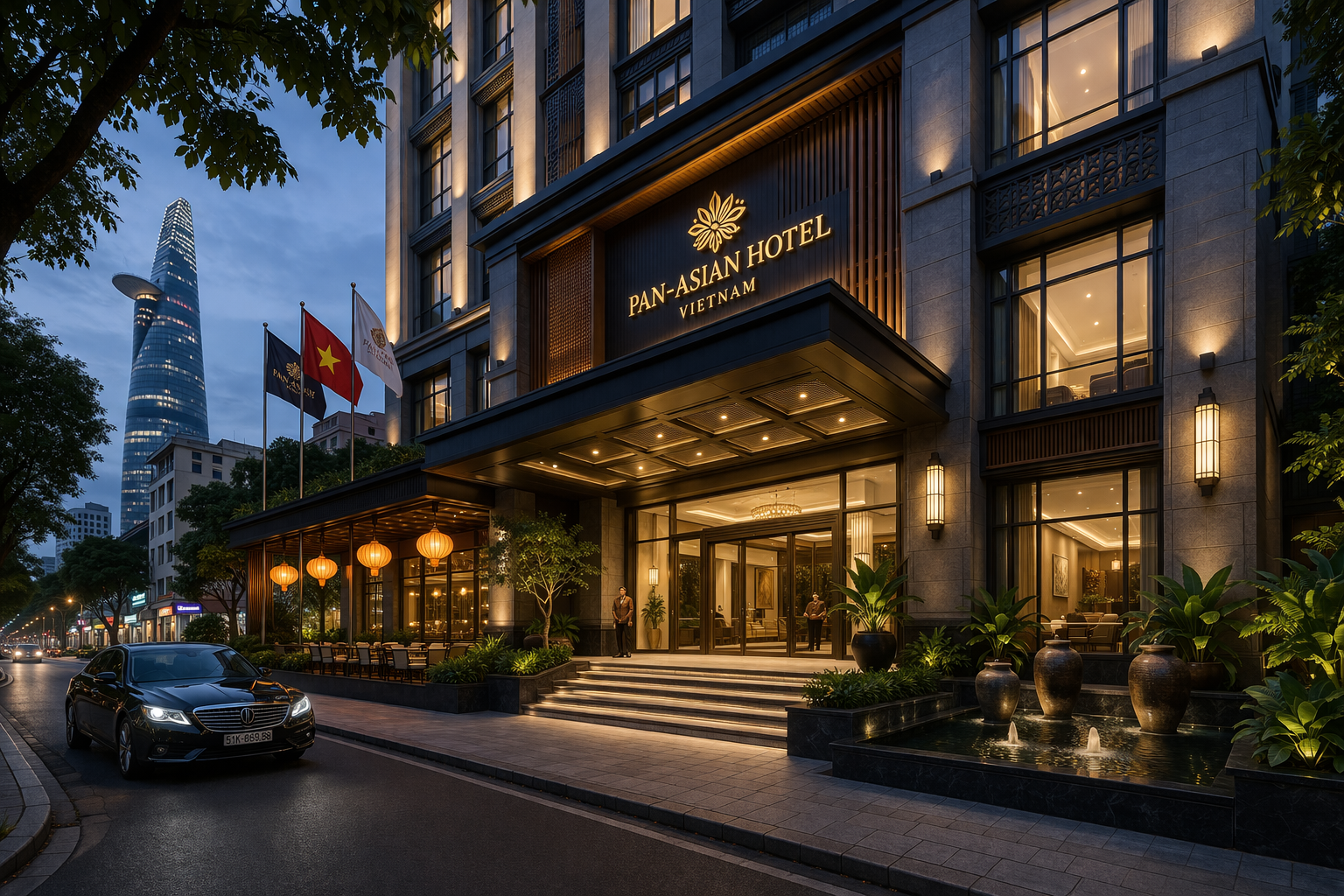
A Singapore investor with a proven, cash-generating Japan hotel base is leveraging that operational credibility to expand into Southeast Asia’s fastest-growing hospitality market. The Fusion Hotel Group acquisition completes the platform.
The deal that crossed the wire on March 17, 2026, looked routine at first glance. SC Capital Partners is a Singapore-based private equity firm led by founder and chairman Suchad Chiaranussati. It acquired Fusion Hotel Group, a Vietnam-headquartered wellness hospitality operator with 18 properties and roughly 3,000 keys across Vietnam and Thailand. Financial terms were not disclosed.
Upon closer examination, however, the transaction represents much more than a routine deal. It serves as the culmination of a deliberate, multi-year platform-building strategy now extending across Japan, Vietnam, Thailand, and Indonesia, all anchored by Singapore as the financial and strategic nerve centre. This development sends a clear message to hotel operators and developers tracking capital flows across Asia: this move is a calculated expansion based on a proven operational foundation, rather than a speculative bet on an emerging market.
The Platform: Japan Is the Foundation, Not a Footnote
To understand why the Fusion acquisition matters, you have to start in Japan — not Vietnam.
Suchad’s hospitality platform is larger than the headline of the Fusion deal suggests. Through SC Capital Partners, he sponsors Japan Hotel REIT Advisors (JHRA). JHRA manages the largest listed hotel REIT in Japan by hotel value. Its portfolio includes 78 hotels and over 22,000 rooms nationwide.
Hotel Management Japan (HMJ), its operational arm, runs 26 hotels and over 8,000 keys across 11 prefectures under Oriental Hotels & Resorts. HMJ also provides white-label management services for Hilton, Marriott, and IHG.
Read that last line again. HMJ already operates under the flags of the three largest hotel groups in the world. That is not a regional niche operator. That is an institutionally credible management platform with established relationships at the highest level of the global hospitality industry.
Add Topotels Hotels & Resorts, an Indonesian hotel management firm with a growing portfolio. Add Fusion’s 18 properties and 3,000 keys across Vietnam and Thailand. The platform has a secured pipeline of 2,000+ additional keys. Together, the platform totals over 38,000 keys in four markets and is supported by more than 100 hospitality professionals.
As Suchad stated in the acquisition announcement: “Strong operating platforms are increasingly essential to successful real estate investing.” This reinforces the platform’s strategic thesis.
The structure matters as much as the scale. Fusion will continue to operate independently under the leadership of CEO Christopher Hur and its existing management team. They will focus on brand development, hotel management, and concept design. This is not an absorption. Rather, it is portfolio architecture. Each entity retains its brand identity and market position. They will share capital infrastructure, technology, and distribution capabilities across the platform.
For hotel operators watching this space, the implication is clear: the era of single-brand, single-market independent operators in Southeast Asia is coming to an end. Platform thinking is now in ascendance. Scale, brand diversification, and institutional management credibility form the competitive moat that partners, owners, and lenders increasingly require.
Why Vietnam, Why Now
Vietnam’s hospitality fundamentals have quietly strengthened for years. In 2025, the numbers became unmistakable: international arrivals totalled about 21 million, putting Vietnam firmly on the map as a regional tourism destination rather than simply an emerging one.
Room rates are likely to keep rising through 2026 and 2027, driven by limited quality supply in premium coastal markets and rising demand from both international and domestic travellers.
A more interesting data point is how Vietnam compares to its regional peers. Development costs for a premium resort in Vietnam are much lower than in Thailand, Bali, or Singapore. At the same time, average daily rates in Da Nang and Phu Quoc are catching up to Thailand’s mid-tier resort benchmarks. This gap between costs and rates is the kind of arbitrage sophisticated investors spot before the market catches up.
Suchad frames this clearly: Fusion “offers a meaningful presence in Vietnam one of the region’s fastest-growing, most difficult hospitality markets.” The term ‘high-barrier-to-entry” is key. Vietnam is tough to operate in; regulatory complexity, market knowledge, and trusted relationships are vital. Fusion offers that access, built over 18 years on the ground.
Vietnam’s government has played a key role in this trend. Regulatory frameworks for foreign hospitality investment are now more predictable.
Infrastructure investment, especially in coastal roads and airport access, has accelerated. The country has made wellness tourism a strategic priority in its national tourism plan.
The SC Capital / Fusion deal is not isolated. In March 2026, another Singapore-linked entity acquired Hotel Perle D’Orient Cat Ba, a 5-star northern Vietnam property, for $38 million—one of the few public prices in a market where terms are usually private.
Two major Singapore capital transactions in the same market within weeks signal a pattern, not a coincidence.
Wellness and Residences: Two Revenue Streams the Market Is Still Underpricing
For developers evaluating Vietnam pipeline opportunities, the Fusion model offers two structural revenue arguments that go beyond the lifestyle branding.
The first is wellness as RevPAR protection. Wellness-integrated resorts in Southeast Asia show stronger performance and lower seasonality risk than pure beach properties. Resorts that generate year-round revenue from spa treatments, wellness programs, and experiences are less exposed to short peak seasons. Pure leisure properties along Vietnam’s central coast have historically suffered from compressed returns during these peaks.
The global wellness tourism market was valued at about $814 billion in 2022. It is projected to top $1.4 trillion by 2027. The Asia Pacific region is growing fastest. Vietnam is actively positioning itself along this path. Operators in the country now incorporate therapeutic programming at the concept stage, not after opening.
The second, less discussed revenue source is branded residences. The press release notes Fusion has developed and operated branded residences alongside its hotel portfolio, describing this as “a rapidly growing segment in Asia Pacific.” This is significant for developers.
Branded residences are increasingly essential to the economics of premium resort development in Vietnam. They provide upfront capital recovery, improving project IRR and reducing reliance on stabilised hotel income. A management platform with a branded residence experience is a much more attractive partner than one without.
What This Means for Operators and Developers
Three practical implications stand out.
First, the platform’s credibility bar is rising. HMJ’s management ties with Hilton, Marriott, and IHG show institutional-grade operations in the Asia Pacific. Developers in Vietnam and Southeast Asia should ask not just about brand identity but also operational infrastructure, technology investment, and distribution reach. Fusion’s integration into the broader platform strengthens it on all three fronts.
Second, Vietnam’s coastal premium segment is repricing. Rising international arrivals, tight quality supply, and growing investor confidence are pushing achievable rates in premium coastal markets toward regional benchmarks. Developers who secured land in key locations in Vietnam over the past three to five years now hold much more valuable positions. New entrants face a different valuation environment.
Third, the Japan-to-Southeast Asia capital corridor is active. Singapore is the main financial hub, but Japan is where the operational model was proven. Suchad started by building a large, institutional Japanese hotel platform. He is now leveraging that credibility in higher-growth Southeast Asian markets.
Other Asia Pacific operators will study this template. The combination of proven management and access to growth is exactly what long-term hospitality investors want.
Vietnam is not the next Bali. It is a more complex market, with greater regulatory nuance, greater geographic diversity, and a hospitality sector still in formation. For operators and developers with the right regional knowledge, the SC Capital / Fusion deal sends a clear signal: smart money has spotted this market, built the platform to serve it, and is moving decisively.
VoyageWire covers hospitality intelligence across India, Southeast Asia, and the Middle East. This analysis is based on the official acquisition press release issued by Fusion Hotel Group on March 17, 2026, and market data current as of March 2026.