


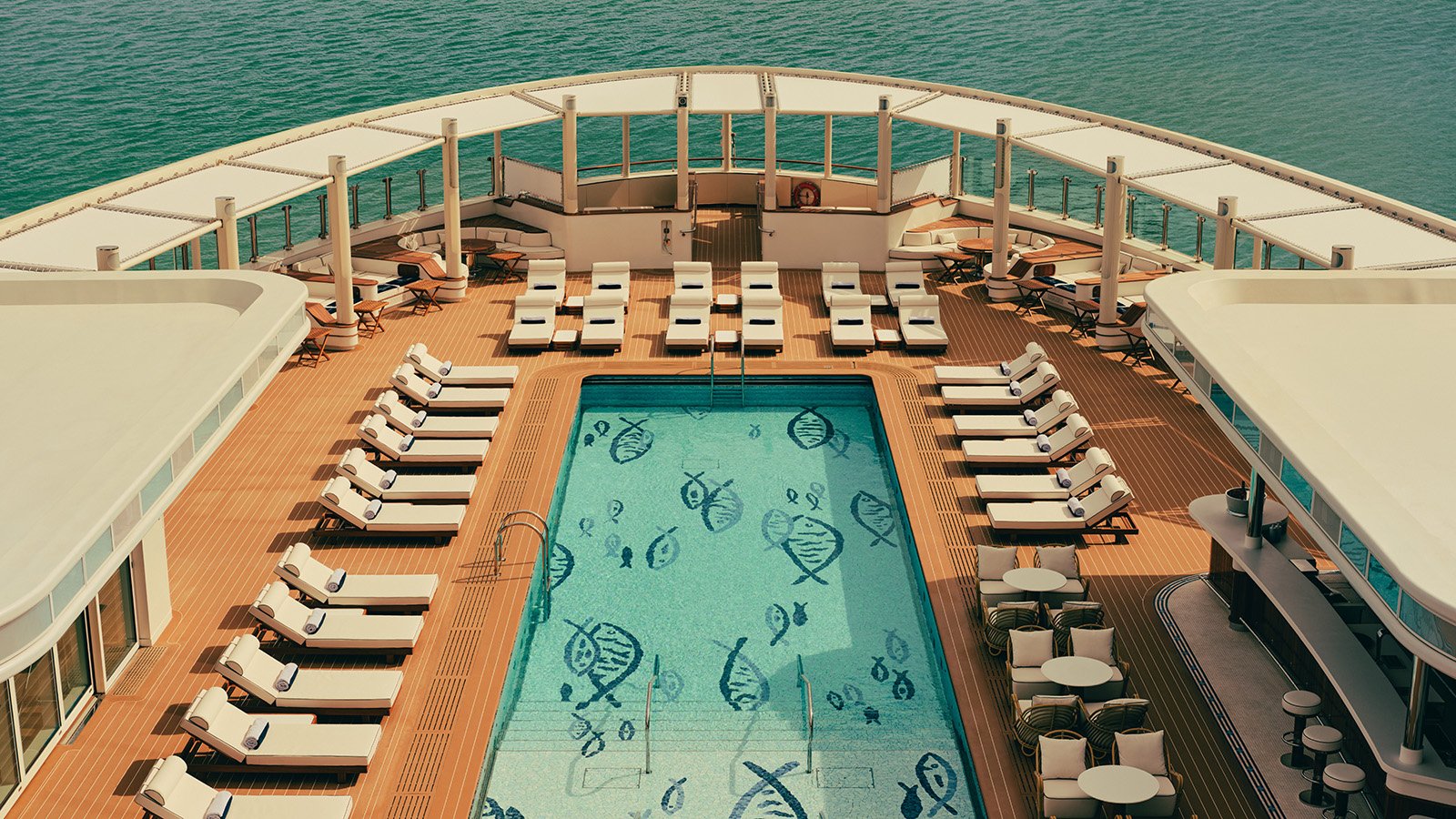
Ninety-five Suites, No Shoreline: How Four Seasons Is Rewriting Luxury Travel
The launch of Four Seasons I is more than a product story. It signals the next frontier of ultra-luxury hospitality—and a new mandate for investors, operators, and every competing brand ashore.
A 65-Year Brand Extends Its Reach to the Ocean.
On March 20, 2026, Four Seasons Yachts launched its inaugural vessel, Four Seasons I, on a maiden voyage departing Malaga, Spain. The date was not accidental; it marked exactly 65 years since the brand opened its first hotel.
The symbolism was direct. This wasn’t a one-off charter or licensing play it was Four Seasons staking its claim: the sea is now core terrain.
At 207 metres (679 feet), with 95 all-suite rooms, zero interior cabins, and a one-to-one guest-to-crew ratio, the vessel Four Seasons I was purpose-built from the ground up, designed by Tillberg Design of Sweden, with social spaces by Martin Brudnizki Design Studio, and constructed by Fincantieri, Italy’s foremost shipbuilder. The result is a floating hotel that competes not with cruise lines but with the brand’s own best land properties.
The headline figures tell part of the story: an approximately 10,000-square-foot Funnel Suite, 11 dining venues, a transverse marina that opens port-to-starboard for direct sea access, and a rotating roster of Michelin-starred chefs from Four Seasons properties in Paris, Hong Kong, Athens, and Florence. But the more important question for industry observers is not what Four Seasons built, but why, and what follows.
INTELLIGENCE SNAPSHOT
- 207-metre vessel with 95 all-suite cabins and zero interior rooms
- One-to-one guest-to-crew ratio across all sailings
- Pricing from USD 3,000 to USD 45,000 per suite per night
- Funnel Suite peaks at approximately USD 350,000 per week in summer
- 32 voyages across 52 sailings in 2026
- 130 destinations across 30+ countries and territories
- Mediterranean in summer, Caribbean and Bahamas in winter
- Four Seasons II confirmed for 2027
This Is Not a New Category. It Is an Accelerating One.
Four Seasons has positioned its yacht venture as the debut of “hotel-led yachting,” a category it emphasises in its marketing. However, that “hotel-led yachting” claim merits scrutiny, as another credible competitor in the space already exists. To clarify, what distinguishes Four Seasons’ offering from this established competitor?
Ritz-Carlton Yacht Collection launched Evrima in 2022, followed by Ilma in 2024. Both vessels operate on a similar philosophical premise. They bring the brand’s hospitality DNA to sea, target the same ultra-high-net-worth traveller, and charge accordingly.
The existence of two luxury hotel brands now operating yachts is not a coincidence. It reflects a structural trend. The ultra-wealthy are increasingly allocating travel spend to experiences that cannot be replicated. A private superyacht experience with hotel-grade service sits at the top of that hierarchy.
Brand | Vessel | Suites | Launched |
Four Seasons | Four Seasons I | 95 suites | Mar 2026 |
Ritz-Carlton | Evrima | 149 suites | 2022 |
Ritz-Carlton | Ilma | 224 suites | 2024 |
Explora Journeys | Explora I | 461 suites | 2023 |
Aman | Aman at Sea (Project) | TBC | TBC |
Four Seasons stands out by imposing discipline: with 95 suites, Four Seasons I deliberately pursues intimacy—evoking a superyacht, not a cruise.
That positioning gap is not accidental; it anchors the product firmly in the UHNWI (ultra-high-net-worth individual) segment rather than the broader luxury cruise market.
Four Seasons I Pricing: A Hotel Model at Sea
Four Seasons I pricing follows the hotel model: rates are per suite, not per person, and are not all-inclusive. Entry-level suites start at just under USD 3,000 per night, while the Funnel Suite can reach up to USD 45,000 per night.
On a voyage basis, a nine-night Grand Mediterranean itinerary starts at USD 28,500 per suite, while seven-night Greek Isles sailings begin at USD 23,500. Seven nights in the Caribbean cost at least USD 20,000 per suite.
At the extreme end, the Funnel Suite reaches approximately USD 350,000 per week during the peak Mediterranean summer season. The vessel itself represents a capital commitment of that scale construction cost was approximately €400 million.
The strategic significance of this pricing model is not in the figures but in what is excluded. Lunch, dinner, and alcoholic drinks are charged separately a clear break from the all-inclusive pricing of almost every luxury and ultra-luxury cruise line.
Breakfast, non-alcoholic beverages, Wi-Fi, watersports, gratuities, and port fees are included, but the core dining experience is not. Four Seasons suggests guests budget an additional USD 250 per person per day for food and beverages on top of the suite rate.
For a couple on a seven-night trip, that means about USD 3,500 extra before any wine is ordered.
This is intentional a positioning choice. Four Seasons targets guests who already spend USD 2,000 to USD 3,000 per night at its hotels, echoing the profile of private jet owners and charterers.
The guest does not equate value with all-inclusive pricing. They equate value with quality, space, and on-demand service. The à la carte model reinforces that framing and in doing so, draws a clean line between Four Seasons I and every luxury cruise line that sells itself on the promise of leaving your wallet at home.
The Business Model Logic: What Hotel Brands Gain From Going to Sea
For a brand like Four Seasons, a yacht is not primarily a revenue vehicle. It is an asset for retention and acquisition. The guest profile that books the Funnel Suite at Four Seasons I is the same guest who books the Presidential Suite in Paris or the private island in the Maldives.
Extending the brand to sea means extending the relationship calendar, giving UHNWI travellers another Four Seasons touchpoint across the year without requiring them to leave the brand ecosystem. Each new yacht guest who becomes a repeat Four Seasons guest increases the brand’s lifetime value. The effect compounds with every voyage.
The yacht does not need to be the most profitable asset in the portfolio. It needs to anchor the brand’s aspirational ceiling.
There is also an itinerary-access angle that land properties cannot replicate. The transverse marina model, yacht-only harbour access, and port-to-starboard water entry give guests experiences that no hotel room, however spectacular, can provide. This is core to Four Seasons’ value. The yacht deepens the brand’s exclusivity and reinforces its land-based strengths.
KEY SIGNAL FOR INVESTORS
- Four Seasons I is a brand retention asset first, revenue vehicle second
- Target guest spends USD 2,000–3,000 per night at Four Seasons hotels on land
- Yacht extends the brand relationship calendar without the guest leaving the ecosystem
- Transverse marina and yacht-only harbour access create experiences no hotel room can replicate
- Watch: repeat booking rates from existing Four Seasons hotel guests — the real test of ecosystem stickiness
What Hotel-Led Yachting Does to the Global Cruise Market
To understand the disruption, start with the scale of what is at stake. The global cruise market was valued at approximately USD 55 billion in 2024. It is projected to reach USD 85 billion by 2033, growing at a CAGR of around 4.9%.
Within this, the luxury cruise segment, where Silversea, Seabourn, Regent Seven Seas, and Crystal operate, accounted for roughly 15% of the overall cruise market in 2024, valued at approximately USD 9.7 billion and projected to grow to over USD 27 billion by 2037 at a CAGR of 8.2%. This is a large, growing, and investor-active market and it is precisely here that Four Seasons I exerts its greatest pressure.
The instinct is to read Four Seasons I as a story about the cruise industry. It is not, and that distinction matters. Four Seasons is not competing with Norwegian, MSC, or Royal Caribbean.
The 95-suite vessel, with a one-to-one crew-to-guest ratio, targets guests who would otherwise choose a private superyacht charter over Caribbean sailing. In that sense, hotel-led yachting is not disrupting volume cruise. It is operating in entirely different water.
But the disruption lands squarely on the luxury cruise segment. Lines like Silversea, Seabourn, and Regent Seven Seas have spent years charging premium fares starting at around USD 1,500 per cabin per night. They promise intimacy, personalised service, and destination depth.
Ultra-luxury cruising currently represents less than 2% of all cruise passengers annually, but commands a disproportionate share of revenue. Four Seasons I targets exactly this cohort. When a guest can pay a comparable premium and receive an actual Four Seasons property at sea—which includes rotating Michelin-starred chefs, a private transverse marina, and zero interior cabins—the comparative value of a 500 to 700-cabin “ultra-luxury” cruise ship with fewer such amenities becomes structurally harder to defend.to defend.
The market bifurcation this creates is not cyclical; it is structural. On one end, mega-ships from the major lines continue scaling aggressively. By the end of 2025, the global ocean cruise fleet is projected to carry 33.7 million passengers across 370 ships, a 22.4% increase over 2019 passenger volumes.
On the other end, hotel brands with established UHNWI relationships are building floating extensions of their land properties. Brand trust does the commercial work that cruise marketing cannot replicate.
The middle ground where Silversea, Seabourn, and peers operate is now squeezed from both above and below. Compression is accelerating.
The Squeeze Play
- Global cruise market: USD 55 billion in 2024, growing to USD 85 billion by 2033 at 4.9% CAGR
- Luxury cruise segment growing faster at 8.2% CAGR, reaching USD 27 billion by 2037
- Mid-tier luxury lines — Silversea, Seabourn, Regent — squeezed from above by hotel-led yachting
- Squeezed from below by mainstream lines expanding premium offerings at lower price points
- Market is bifurcating: mega-ship volume players at one end, hotel-brand intimacy vessels at the other
- Watch: whether Aman’s confirmed 2027 yacht entry signals hotel-led yachting is now a required asset for any ultra-luxury brand
What Comes Next: The Intelligence Watch List
Four Seasons II is confirmed for 2027. That vessel’s size, itinerary, geography, and pricing structure will be the clearest indicator of whether Four Seasons is building a niche marquee asset or a genuine multi-vessel business.
If Four Seasons II is materially larger or targets a different geography, particularly Asia, the strategic intent shifts from brand trophy to scalable division.
The Ritz-Carlton Yacht Collection’s pace of expansion two vessels in three years, with more reported in development suggests the market has validated the model faster than initially projected.
If Aman, which has explored a yacht concept for years, formally enters this space, it will signal that hotel-led yachting is an expected component of any ultra-luxury brand’s product portfolio. Right now, Four Seasons I sets the unmistakable standard for the hotel-at-sea concept. This is no cruise ship with a hotel badge it is a Four Seasons property that moves. That distinction is crucial, as is a clear understanding of what this means for the flow of ultra-luxury travel capital in the years ahead. Now in the years ahead.