


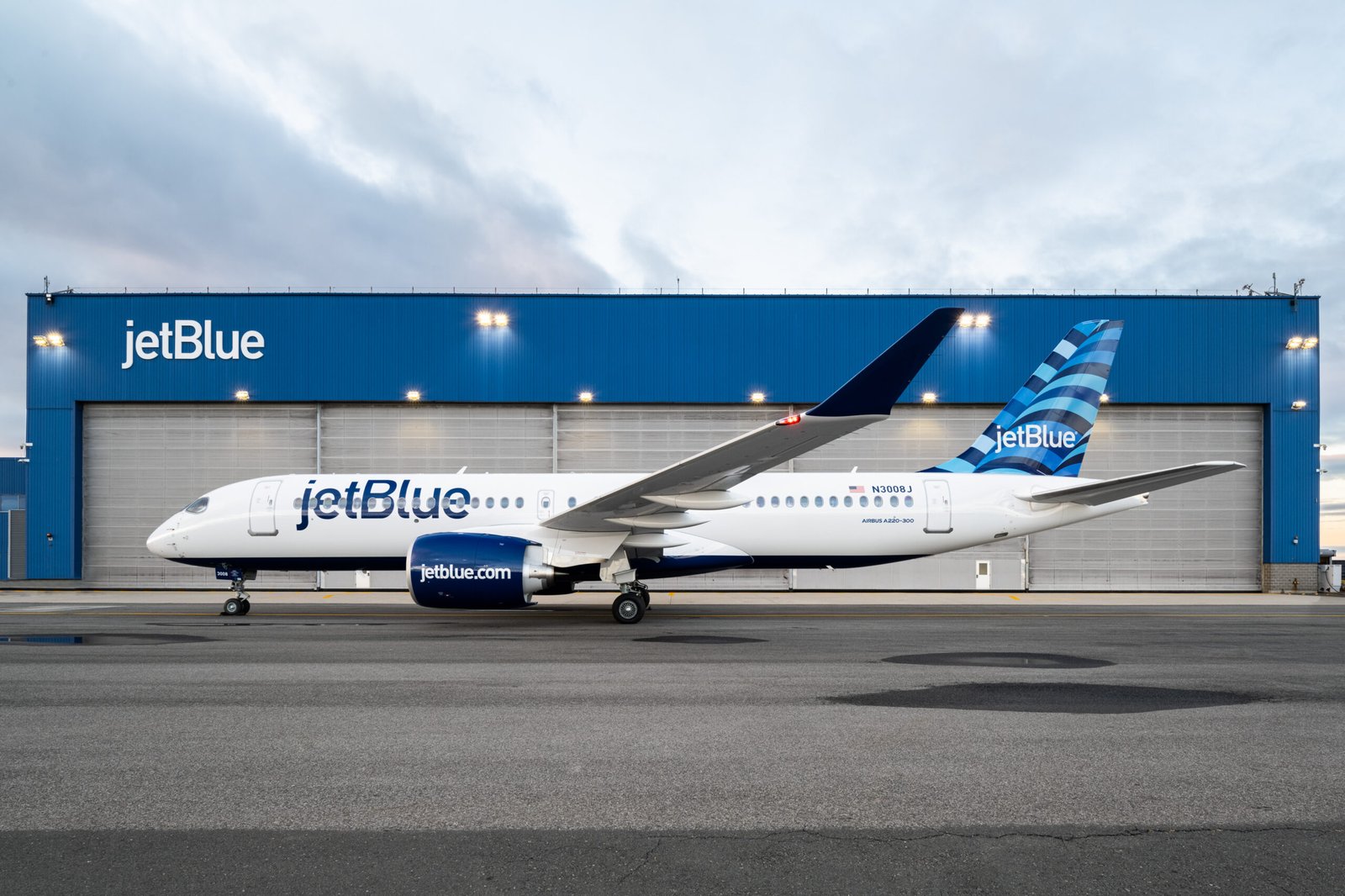
JetBlue now offers travellers a monthly payment loan on vacation packages. This is not a deferred payment feature. The fine print shows APRs can reach 36%. The credit underwriting process places risk on the consumer. This raises questions about JetBlue’s true objectives.
Key Takeaways
- JetBlue Vacations has partnered with Flex Pay, a BNPL product from Upgrade Inc. It now offers monthly instalment financing on flight and hotel packages. This is available across mobile, desktop, and call centre booking flows.
- The product is a consumer loan, not a deferred payment feature. APRs range from 0% to 36%. A representative example shows a 15% APR after the promotional period. Credit scoring applies, and not all applicants will be approved.
- A 0% APR promotional offer runs from April 20 to April 23, 2026, only a three-day window that serves as a marketing activation, not a structural product feature.
- JetBlue Vacations is powered by Paisly, a third-party platform. This financing layer is a Paisly-level commercial decision, not a JetBlue Airlines balance sheet commitment.
- Upgrade Inc. has delivered over $47 billion in credit to 7.8 million customers since 2017, a substantial fintech footprint that builds underwriting credibility while also positioning Flex Pay as a credit product with all associated consumer risk disclosures.
Building on the partnership with Flex Pay, JetBlue Vacations announced on April 20, 2026, that it has integrated Flex Pay—a Buy Now, Pay Later solution from Upgrade Inc.—into its flight-and-hotel package booking flow.
Customers can now spread the cost of eligible vacation packages into monthly instalments, available across desktop, mobile, and phone bookings. To mark the launch, JetBlue is running a 0% APR promotional offer through April 23, 2026, on 12-month terms. The promotion window is three days.
This brief promotional period is an early indication that the announcement serves marketing priorities more than product maturity.
By launching with a 72-hour promotional rate, JetBlue uses financing to create a news moment one designed to outlive the promotion itself. This marketing-driven strategy warrants a deeper look at the actual product than the press release suggests.
This Is a Loan, Not a Flexible Payment Feature
The travel industry often uses the term BNPL (Buy Now Pay Later) to refer to both deferred payment features and instalment financing, but these are fundamentally different. Deferred payment typically poses little risk to consumers, while instalment financing involves consumer loans with interest and credit checks. Treating them as the same obscures both the risks for consumers and the strategic motivations for operators.
Airbnb’s Reserve Now, Pay Later, launched in Asia-Pacific in February 2026, is a deferred payment product that defers the full payment until shortly before the cancellation window closes, with no interest, no credit check, and no APR. Here, the platform absorbs the timing risk, creating a very different consumer experience from financing products.
JetBlue’s Flex Pay is a consumer loan underwritten by Upgrade Inc.’s lending partners. APRs range from 0% to 36%. Approval depends on the applicant’s credit score. The fine print provides an example: a $1,000 package costs $90.26 upfront, followed by 11 monthly payments at 15% APR.
A customer who books a $1,000 vacation package on a non-promotional term and carries it to maturity at 15% APR will pay materially more than the advertised package price. That is a credit product, and it should be evaluated as one.
APRs as high as 36% on vacation packages do not constitute payment flexibility. Instead, they represent consumer credit—often marketed within travel as flexibility, but fundamentally distinct from no-interest, no-credit-check options.
What JetBlue Is Actually Trying to Solve
JetBlue has had a difficult two years. The failed Spirit Airlines merger, subsequent strategic reset, and ongoing pressure on unit revenues have forced the carrier to look harder at ancillary revenue streams and package attachment rates.
JetBlue Vacations powered by Paisly is part of that diversification strategy. Flight and hotel packages have better margins than standalone airfare. Increasing package conversion is a commercially rational priority for an airline under financial pressure.
Instalment financing addresses a specific conversion barrier: sticker shock on package pricing. A customer who baulks at a $2,500 flight-and-hotel package at checkout may complete the booking if presented with an estimate of a $208 monthly payment.
That is the mechanic Flex Pay provides. It is not access to travel for underserved consumers, as the press release implies. Conversion rate optimisation at checkout is the main purpose. The accessibility framing is marketing language. The commercial intent is to reduce cart abandonment on higher-value packages.
That is a legitimate business objective. The question is whether consumer credit is the right instrument to achieve it, and whether JetBlue Vacations is prepared for the customer service and reputational exposure that come with travellers who financed a vacation at 15% to 36% APR encountering cancellations, itinerary changes, or refund disputes.
The intersection of consumer lending and travel flexibility is operationally complex, and the press release is silent on how those scenarios are handled.
The Paisley Layer and What It Means
JetBlue Vacations is not run by JetBlue Airlines. Paisly, a third-party platform, operates it. Flex Pay integration was Paisly’s decision. This distinction is important for investors watching JetBlue’s finances. The airline does not guarantee or underwrite the financing.
Upgrade Inc.’s lending partners handle the credit risk. JetBlue’s risk is reputational. If this product draws complaints or regulatory attention to disclosure practices, JetBlue Vacations’ brand is affected, even if the legal liability is not theirs.
Upgrade Inc. is a credible fintech operator with $47 billion in credit delivered to 7.8 million customers since 2017, which is a meaningful track record, and Flex Pay is an established product within their portfolio.
The partnership poses no counterparty risk. The risk lies in how the product is positioned to consumers. Some consumers may not read the fine print carefully enough to understand that a 0% APR promotional offer converts to a variable-rate loan after April 23.
What to Watch
The meaningful metrics are package attachment rate and average order value for JetBlue Vacations bookings in Q2 and Q3 2026. These are the first full quarters after launch. If Flex Pay moves the needle on package conversion, it will show up in Paisly’s reported performance and JetBlue’s ancillary revenue line.
If adoption is thin outside the promotional window, the product will quietly recede into the checkout flow as an available but underused option.
The 0% APR promotional window closes on April 23. This is the first test: how many bookings will a three-day zero-interest offer generate? What does the drop-off look like at standard APR rates? The answers reveal whether this product meets demand or is manufactured.