


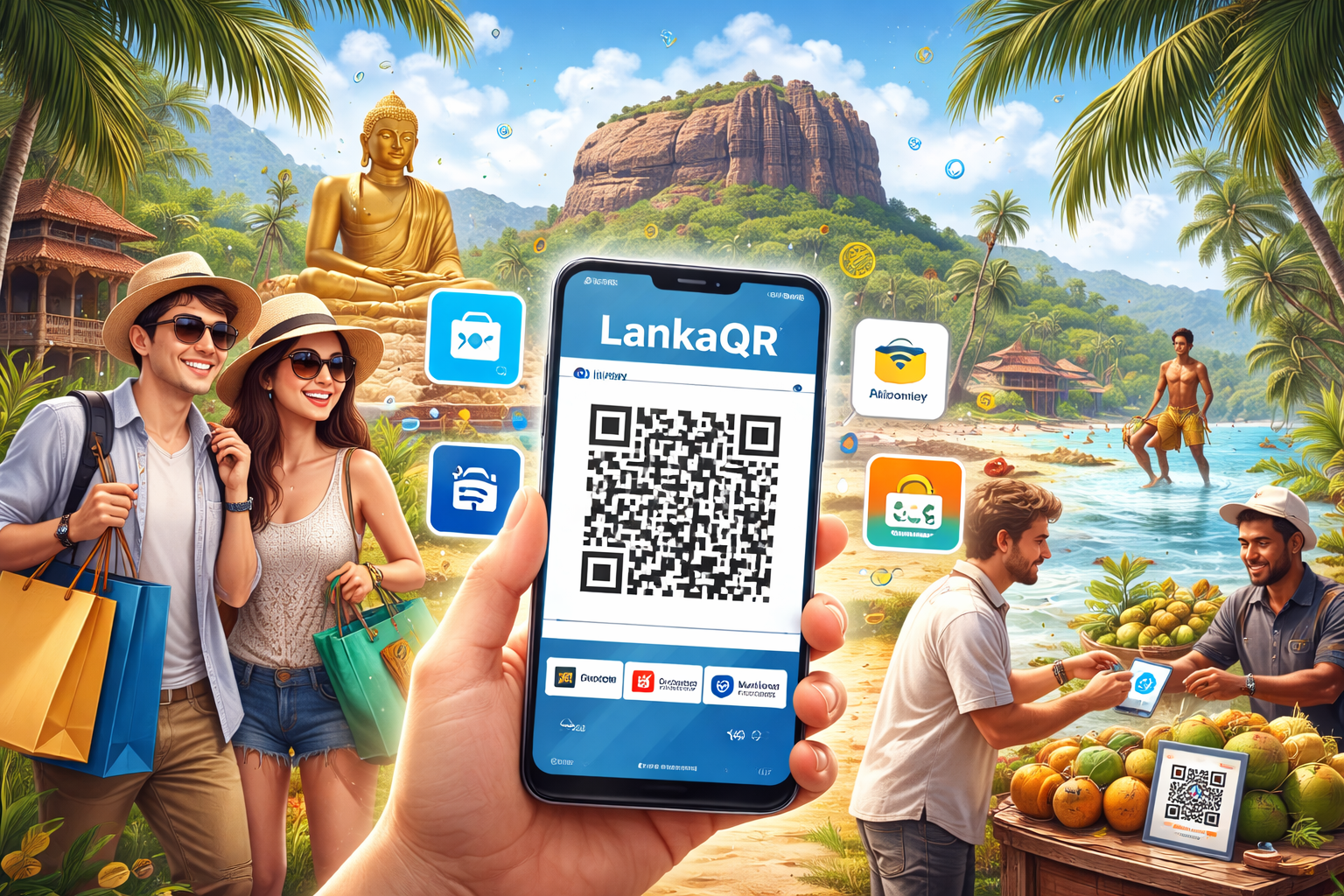
Imagine arriving in Sri Lanka and instantly using your favourite payment app no hassle, just a quick scan with LankaQR. Now, thanks to LankaPay, the Sri Lanka Tourism team, and Alipay+, tourists from across APAC can pay with comfort and ease, unlocking new travel possibilities.
VoyageWire Staff |April 16, 2026
Sri Lanka is embedding mobile wallet payments into its tourism strategy through a partnership among LankaPay, SLTDA, and Alipay+ to support Asia-Pacific digital travellers.
The deal allows tourists to pay with their familiar home-country apps Alipay (China), Touch ‘n Go (Malaysia), TrueMoney (Thailand), and Kakao Pay (South Korea)—at merchants using LankaQR, Sri Lanka’s national QR system. Alipay+, operated by Ant International, connects more than 40 partner wallets and banking apps that serve 1.8 billion accounts worldwide.
The announcement builds on a 2025 rollout that extended Alipay+ acceptance to hundreds of thousands of Sri Lankan merchants and established QR payment rails. The current partnership activates the demand side of that infrastructure: tourists using Alipay+ partner apps receive targeted promotions and offers when they pay via LankaQR, turning point-of-sale moments into marketing touchpoints.
For travel operators and destination managers, this isn’t just technology—it’s a new way to eliminate friction for travellers who expect easy, cashless payments. Especially for Chinese tourists, familiarity with payment methods can be the difference between booking a tour and walking away. Supported methods mean more local spending at small businesses.e.
Sri Lanka is not alone in this strategy. Tourism agencies in Thailand, Malaysia, and Japan have similar agreements with Alipay+ or WeChat Pay. Sri Lanka stands out by using LankaPay as the national payment infrastructure, so merchant onboarding uses an existing network rather than separate agreements with each business.
Relationship reflects a broader shift in how tourism boards are thinking about destination marketing moving beyond traditional advertising spend toward infrastructure integrations that reduce conversion barriers at the point of arrival. Whether the model translates into measurable increases in Chinese visitor arrivals, which remain well below Sri Lanka’s pre-2019 peak, will depend on the execution of promotional campaigns and the pace of LankaQR merchant adoption in high-traffic tourist areas.