


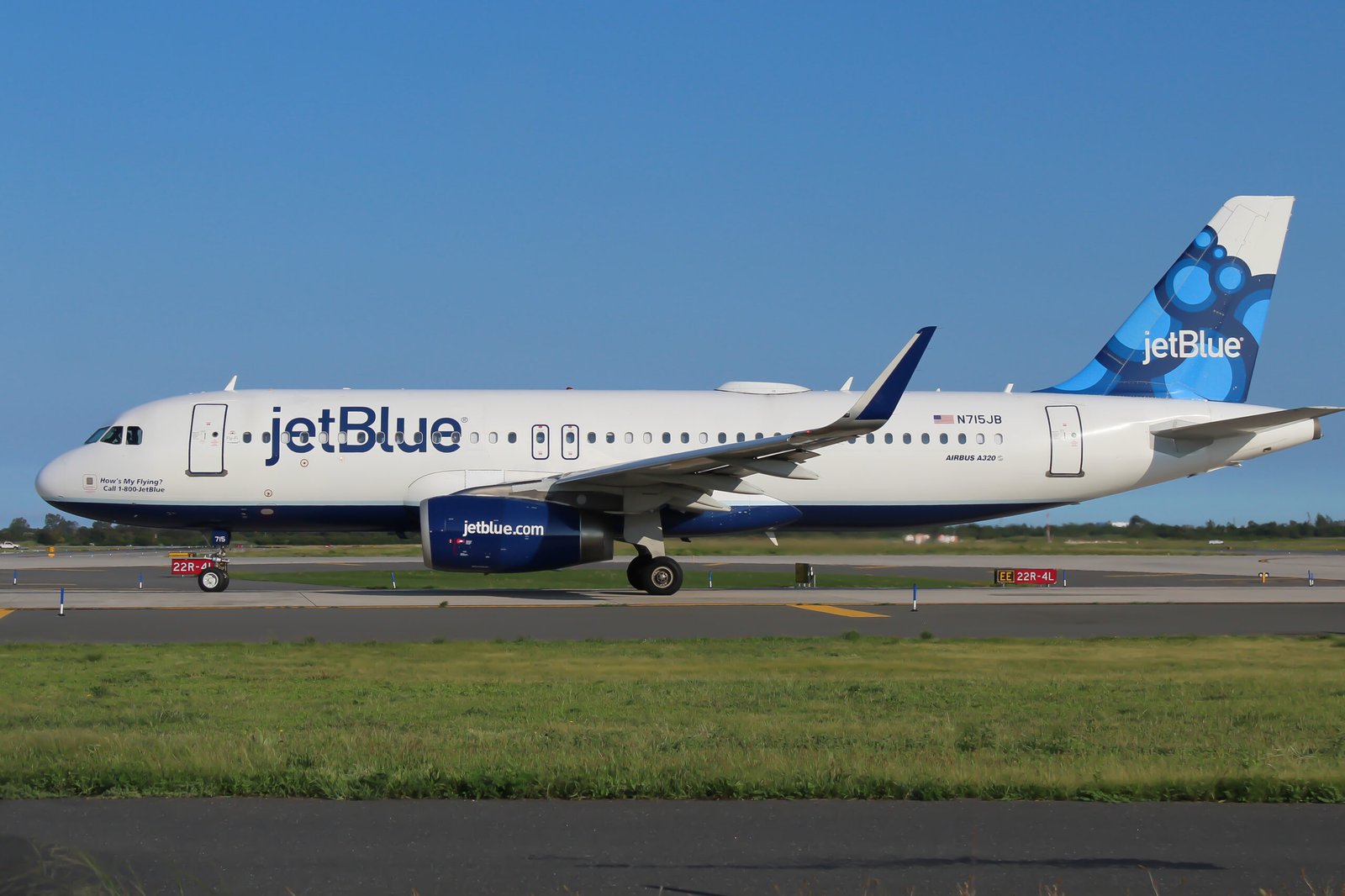
JetBlue has taken on long-term, aircraft-secured debt through a sophisticated structure. However, the straightforward and pressing circumstances that made this necessary stand in stark contrast to the complexity of the arrangement.
VoyageWire ALTIMETER |April 2026| Aviation Finance
JetBlue Airways has finalised a framework agreement with affiliates of SKY Leasing for up to $500 million in secured debt financing, backed by as many as 22 owned Airbus A320 and A220 family aircraft. UMB Bank serves as the administrative agent and security trustee.
The loans are structured as separate, aircraft-specific borrowings with fixed-rate pricing expected between 6.00% and 6.75%, and maturities running from 2033 to 2037. An accordion option adds a further $250 million in potential secured borrowing capacity.
The mechanics of JetBlue’s financing are straightforward. In contrast, the underlying motivation is driven by urgency rather than strategic choice.
What The Structure Actually Does?
This is not a single corporate loan. It is a series of individual aircraft financings bundled into a single framework. Each plane is pledged separately, with its own first-priority lien. Cross-default and, in certain cases, cross-collateralisation provisions link the loans, meaning distress in one tranche can trigger consequences across others.
The A320 and A220 aircraft families were deliberately chosen. Both types are among the most liquid narrowbody aircraft globally, with strong secondary-market demand and reliable lease rates. Lenders accept them as collateral precisely because repossession and re-marketing are operationally straightforward, a fact that cuts both ways for JetBlue.
The accordion option deserves attention. The $250 million extension is not committed; terms are to be agreed upon. Its inclusion signals that JetBlue’s management anticipates needing additional secured capacity beyond the initial raise or, at a minimum, wants the optionality without reopening negotiations.
Every aircraft pledged now strips JetBlue of future flexibility in a restructuring, sale-leaseback, or fleet repositioning. The airline is sacrificing long-term options for immediate liquidity—perhaps its last lever.
The Jetforward Context
The financing is part of JetBlue’s JetForward turnaround programme. This program targets cumulative EBIT improvement of $850–950 million by 2027.
Management frames 2026’s plan as a balance: pay down about $800 million in debt, including an April convertible note maturity, while raising around $500 million. That framing demands urgent scrutiny.
The $800 million paydown includes maturities the airline is forced to retire. The $500 million raise is new secured debt against owned assets. The net deleveraging, if it occurs, is far more modest than the headline figures suggest.
It also hinges on JetForward meeting its EBIT targets, despite surging fuel prices, weak yield recovery, and relentless cost pressure. These must be achieved despite high fuel prices, weak yield recovery, and cost pressure.
JetBlue’s interest burden is crushing: over $600 million annually, with founder David Neeleman warning that soaring fuel prices could drive interest expense to $800 million and total debt to $9 billion, a trajectory he says risks bankruptcy.
Fitch’s downgrade to CCC+ further highlights the urgency, citing relentless cash burn expected through 2026 and the likelihood of additional debt.
Deal Terms At A Glance
Committed Amount | $500 million |
Accordion Option | $250 million additional |
Collateral | Up to 22 owned A320 / A220 family aircraft |
Structure | Separate aircraft-specific loans, first-priority lien |
Pricing | ~6.00%–6.75% fixed (UST + margin) |
Maturities | 2033–2037 |
Lender / Agent | SKY Leasing affiliates / UMB Bank |
Cross-default | Yes, with cross-collateralization in certain cases |
What this Signals to the Market
Investment-grade airlines with stable cash do not usually borrow against individual aircraft at 6–6.75% fixed rates through private agreements. They access unsecured bond markets, revolving credit, or EETC structures at better terms.
JetBlue’s use of owned aircraft as collateral in a private deal with a specialist aviation lender directly reflects its lack of access to cheaper capital.
UBS maintains a Sell rating on JBLU with a $3.50 price target. The broader analyst consensus sits around Hold, with an average target below recent trading levels.
The financing is generally viewed as credit-supportive in the short term, as it extends runway, reduces near-term refinancing pressure, and avoids a liquidity crunch, but it does not alter the medium-term story of a carrier managing a heavy debt load against uncertain profitability.
The SKY Leasing partnership demands immediate attention. SKY Leasing, a proven aircraft lessor and asset manager in structured aviation finance, replaces the typical bank syndicate.
This strategic decision was clearly driven by JetBlue’s urgent need for financing solutions that fit its current credit profile, while ensuring the lender secures robust protections, hard collateral, cross-default provisions, and a no-call period that restricts JetBlue from exiting on favourable terms.
The Strategic Tension
JetBlue’s fleet, particularly its owned A220S, a type it bet heavily on for route economics, is one of the carrier’s most tangible balance-sheet assets. Encumbering that fleet through first-priority liens to fund current operations creates a structural constraint that persists until the loans are retired.
Should JetForward underdeliver, and the airline face pressure to monetise assets, the pledged aircraft carry lender claims that would complicate any sale-leaseback or accelerated disposal.
The accordion option increases this risk. If used, total secured aircraft debt could reach $750 million, a large share of fleet value tied up until 2033–2037.
JetBlue is now borrowing against hard assets to keep operating and protect its runway. The question analysts and investors are asking is whether the runway leads to profitability or to a restructuring conversation.
BOTTOM LINE
The $500 million framework is well structured: long maturities, A-grade collateral, and a credible partner. It gives JetBlue the time it needs for its turnaround plan, but at a cost. Fleet encumbrance, continued leverage, and closed unsecured markets show the limits of JetBlue’s options.
JetForward needs to work. If it does, this financing will be remembered as a pragmatic bridge.
If it does not, the pledged aircraft becomes a complication in a more difficult conversation. For now, JetBlue has bought itself the runway. Whether it can take off is a separate matter.
VoyageWire ALTIMETER covers aviation finance, network strategy, and fleet economics for institutional readers. © 2026 VoyageWire.